Damned Veil Devlog #1: Normal Mapping & Event Systems
Note: This is a devlog for Damned Veil, a dark pixel art game featuring strategic and challenging gameplay with magical and mysterious feels. Created by a team of 4, known as Divine Table.
Introduction
Damned Veil is a dark, horror-themed pixel game set in a mysterious magical world. refer to Damned Veil project page for more information.
As i mentioned before, I was responsible for creating the art and environment of the game. What makes this project special for me is my experiment with normal mapping in pixel art. Normal maps allow pixel surfaces to react to light dynamically, creating a sense of and immersion in the world, kinda something rarely seen in pixel games.
Global normal map overview :
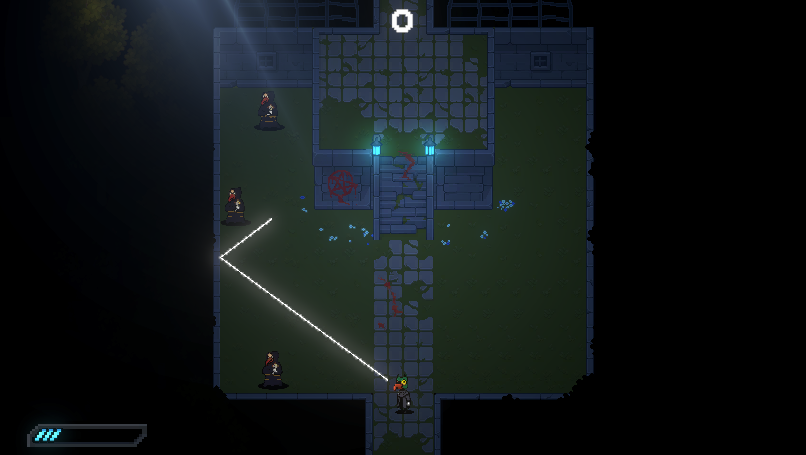
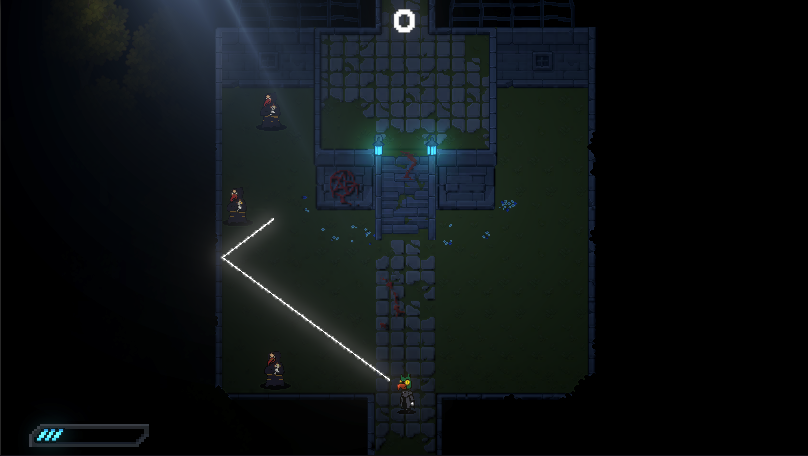
Short story: I had to find a way to make it work in a 2D space while keeping the pixel art with very limited tutorial resources. So I found a way a shortcut to generate normal maps from my tilesets using this website: Normal Map. I don’t know who the random guy that created this site is, but it was a lifesaver for me. It allowed me to create normal maps quickly and easily, and it has a lot of options to customize the results to fit my needs.
I also helped with programming thing, well it wasn’t anything critical, but I got to implement the main menu, level routing, and pause menu. Sounds simple, right? But from here, I learned something that changed how I code in Unity forever, the Unity Event System.
Challenges
Working on Damned Veil came with a bunch of painful exciting challenges such as :
-
Game Design
- Making the topdown strategy shooter gameplay feel engaging and not repetitive and boring.
- Designing levels that are difficult but still fair to win.
- Creating unusual, unique and challanging boss.
-
Programming
- Building a modular enemy spawning system with flexible timing and location settings.
- Calculating accurate bullet reflection paths to support the core gameplay mechanic.
-
Art & Visuals
- Creating a consistent dark fantasy pixel art style that feels immersive.
- Choosing color palettes that support both atmosphere and readability.
- Integrating normal maps into 2D pixel based graphic.
But together, we managed to overcome these challenges and create a game that’s both fun and visually appealing.
Communication and collaboration are important.
Anyway, I actually just stole this line from a relationship advice post, but hey, it works in game development too…
What I Learned
I learned a lot from this project, especially implementing normal mapping in pixel art. It was a challenging because this game is a 2D pixel game, and normal mapping is usually associated with 3D graphics.
Also I learned how to use Unity’s Event System to make my code more modular and decoupled. This has been a game-changer for me, and I will definitely use it in my future projects. Here’s a quick explanation of how it works:
- Delegate : You call your friend directly and ask them to do something.
You need to know exactly who to call, and they need to have a phone ready to pick up. If your friend changes their number or isn’t available, the call fails.
- UnityEvent : You announce something on a megaphone, and everyone who registered to listen will respond.
You don’t care who hears it. You just announce it, and whoever is subscribed/listening will react in their own way.
In short:
- Use Delegate for internal logic that needs precision.
- Use UnityEvent when you want flexible, Inspector-exposed interactions (drag n drop in), like UI, triggers, effects.
Final Thoughts
Damned Veil is a creative experiment blending dark fantasy, puzzle strategy, and pixel art. The result is a game that feels both nostalgic and fresh. With its unique mechanics and eerie aesthetic, it’s more than just another pixel game it’s a mysterious veil waiting to be unveiled.
One more thing, I’ve been working on this game solo lately for personal reasons. I’ve been experimenting a lot, especially with Procedural Spawner Logic (part of my thesis). I’ll talk more about it in the next devlog.
Thanks for reading